
South Jersey Business News


Quick Links
Building the Road Ahead
How transportation infrastructure investment is reshaping South Jersey's economy.
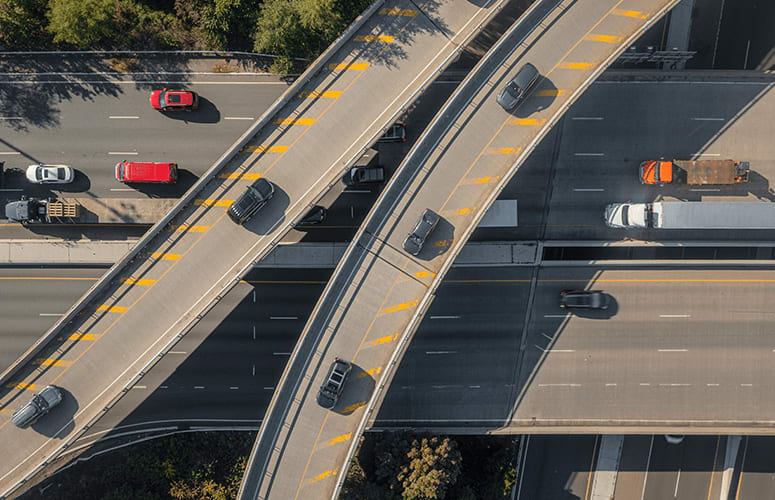
After decades of deferred maintenance and growing congestion, South Jersey’s transportation network is experiencing a significant transformation. From the long-awaited completion of the Direct Connection project linking I-295 and Route 42 to expanded NJ Transit bus service and modernized freight rail corridors, the region is investing heavily in infrastructure that will shape economic development for years to come.
South Jersey’s transportation infrastructure is the foundation that allows goods to flow efficiently from global ports to consumers’ doorsteps. It supports hundreds of thousands of jobs and positions the region to compete in a 21st-century economy.
Improvements are arriving at a critical time, as South Jersey’s logistics sector continues to expand and communities from Camden to Cape May seek better connectivity to Philadelphia and beyond. The question now is whether these upgrades can keep pace with the region’s evolving transportation demands and support the businesses that depend on efficient movement of goods and people.
The Critical Projects
Several projects are underway, but some are particularly critical. The I-295 Direct Connection is the linchpin because it is where three main highways converge near I-95. It provides a direct route to Philadelphia via the Walt Whitman Bridge, while Route 42 serves as a north-south corridor connecting to the Atlantic City Expressway. Traffic congestion at this interchange affects everything—commutes to Philadelphia, trips to the Jersey shore, access to the Delaware Memorial Bridge, and freight trucks moving goods between Philadelphia and South Jersey ports.
The Atlantic City Expressway widening is another important project, as it serves as a primary connection to Philadelphia and is vital for tourism to destinations including Atlantic City casinos and shore resorts such as Cape May, Ocean City, and Wildwood. In Cape May County alone, the year-round population of 95,000 swells to 750,000 during the summer months. The region’s tourism-dependent economy relies heavily on infrastructure improvements.
Logistics and Growth Pressures
The growth in warehousing has been exponential, notes Michael Boyer, director of regional planning, at the Delaware Valley Regional Planning Commission (DVRPC), an organization that covers five counties in Pennsylvania and four in New Jersey, including Mercer, Burlington, Camden, and Gloucester. DVRPC works with local governments on long-range planning projects focused on community development and environmental concerns.
As the population in Gloucester and Burlington counties has grown substantially, so has business development. Many of the roadways are older, archaic and in need of restoration. “In addition to the growth, there is demand for products and services to fulfill consumer needs, leading to an increase in warehouses and a need for sufficient roadways to support trucking traffic,” Boyer comments.
Warehousing brings important benefits to South Jersey, according to David Greek, president of Greek Real Estate and chair of Circulate New Jersey, an advocacy organization representing the logistics industry that supports the substantial economic impact of New Jersey’s warehouse and distribution centers.
“South Jersey has the land available to facilitate warehouses, as opposed to other parts of the state, and warehouses not only contribute greatly to the economy and the local tax base, but [they] add to the gross domestic product,” Greek notes. “Additionally, having warehouses along the north-south corridor from Boston to Washington, D.C., makes it economically feasible for companies such as Walmart and Target.”
The Mass Transit Challenge
While roadways, bridges, and ports remain areas that need improvement to meet the demands of a growing economy, mass transit is also a critical issue.
Southern New Jersey is a transit desert, according to Christina Renna, president of the Chamber of Commerce Southern New Jersey, which covers seven counties in the state’s southern region.
“For residents in southwestern New Jersey, transportation is a chronic issue,” Renna comments. “There’s minimal mass transportation, and with several counties in the southwestern sector having low-income populations, it’s difficult for residents to purchase or own a car. With few additional transportation options, employees in that area are struggling to get back and forth to work.”
Four major colleges are located in the area, as well as major hospitals that are critically in need of mass transportation for employees and students. In August 2025, Gov. Phil Murphy announced one-time federal funding of $5 million to expand micro-transit across southern New Jersey. This initiative may consist of minivan or rideshare transportation supporting commuters, particularly those working in educational and medical facilities, industrial parks, and underserved rural communities. While no completion date has been set, some services have already begun.
A Proven Model for Micro-transit
Another pilot program that has continued to grow with demonstrated success is the micro-transit program covering Trenton and Camden. The programs, essentially rideshares, were started by two local nonprofits—ISLES and Camden Community Partnership—funded by the New Jersey Department of Environmental Protection and grants. The services provide curb-to-curb transportation at $2 per ride, with vans picking up riders along routes.
The programs fulfill a critical role by enabling residents to reach work, school, and medical appointments. In 2024, the Camden Loop alone provided over 100,000 rides.
As South Jersey continues to grow and evolve, these infrastructure investments will determine whether the region can maintain its competitive edge and support the businesses and residents who call it home.
Additional Info
Source : https://njbmagazine.com/monthly-articles/building-the-road-ahead/
Get in Touch with Us
For all CCSNJ media inquiries, please contact:
Meredith K. Lorrilliere
Executive Vice President, CCSNJ