
CATEGORIES
CCSNJ Assembly Budget Public Hearing Written Testimony
The Chamber of Commerce Southern New Jersey (CCSNJ) is the region’s largest and most influential business organization representing businesses in the seven most southern counties of New Jersey, as well as greater Philadelphia and northern Delaware. The CCSNJ has over 1,200 member companies, of which 85 percent are small businesses that employ less than 50 people, as well as 200 nonprofit members. Thank you for the opportunity to comment on the FY2027 state budget as proposed by Governor Mikie Sherrill.
Prior to presenting her FY2027 budget, Governor Sherrill held a press conference outlining the fiscal challenges facing the state, warning that New Jersey is confronting a structural deficit of approximately $3 billion as recurring expenditures are projected to outpace revenues. CCSNJ appreciates the Governor’s straightforward and transparent assessment of the state’s fiscal outlook and her recognition that long-term fiscal stability must remain a priority.
In her proposed $60.7 billion budget for FY2027, Governor Sherrill takes several steps to place the state on a stronger fiscal footing. The budget includes a full pension payment and establishes additional oversight initiatives, including the addition of staff within the Division of Pensions and Benefits to improve contract compliance and strengthen accountability. These steps represent important progress toward ensuring long-term fiscal responsibility.
The CCSNJ also applauds the administration’s investment in shared services. The proposed budget includes a $1 million increase for the Local Efficiency Achievement Program (LEAP) and $5 million to support the consolidation of public safety infrastructure. CCSNJ has long advocated for meaningful structural reforms to New Jersey’s property tax system, including stronger incentives for municipal consolidation and shared services. With 564 municipalities across the state, strategic consolidation of services can generate significant cost savings while improving efficiency for taxpayers. The success realized through the creation of the Camden County Police Department demonstrates how regional collaboration can improve service delivery while reducing costs.
The CCSNJ also appreciates the proposed investments to support small businesses and economic development. The budget includes an additional $13.3 million for the New Jersey Innovation Authority, which was created to support major operational improvements designed to streamline permitting and reduce administrative burdens facing businesses. The budget also maintains funding for the Small Business Bonding Readiness Assistance Fund and Wealth Disparities Initiatives and provides $500,000 to establish staff who will provide training and technical assistance to Minority and Women Business Enterprises (MWBE) navigating the state’s procurement and contracting process. These programs play an important role in supporting entrepreneurship and ensuring that businesses of all sizes have the opportunity to participate in the state’s economy.
The FY2027 budget includes more than $1 billion in state support for NJ Transit - an increase of $215.3 million over FY2026 - comprising a $282.2 million General Fund subsidy and $765.6 million in dedicated revenue from the Corporate Transit Fee. CCSNJ applauds this investment in public transportation while urging the administration and the Legislature to ensure that South Jersey is not left behind.
South Jersey remains, in many ways, a transit desert. Businesses and residents across our region are contributing to a system they desperately need but have limited ability to access - paying for public services that, in many communities, simply do not exist. That inequity must be addressed.
Last year, thanks to the leadership of Assembly Majority Leader Louis Greenwald and Governor Phil Murphy, $5 million in federal funding was secured to launch SJ Connects, a new micro-transit initiative designed to expand mobility and improve workforce access throughout South Jersey. The pilot program includes six new routes serving communities in Legislative Districts 1, 2, 3, and 7, with additional connections reaching Districts 4, 5, and 6. The routes have been approved by NJ Transit, will be overseen primarily by the South Jersey Transportation Authority, and are expected to launch between late May and June of this year. The pilot is designed to run for approximately 18 to 24 months.
SJ Connects will meaningfully expand access to employment centers, education, healthcare, and other essential services for communities that have gone without for far too long. But a pilot program is only as valuable as the commitment to sustain it. We urge the Legislature to ensure that funding beyond the initial $5 million federal investment is available to support, and ultimately expand, this critical initiative.
While the CCSNJ supports many components of the proposed budget, we have concerns regarding several proposed tax policies that could negatively impact businesses and nonprofit organizations across the state.
First, the CCSNJ is concerned about the proposed Employer Healthcare Assistance Contribution, which would impose an assessment on employers with 50 or more employees enrolled in NJ FamilyCare. This proposal effectively penalizes employers simply because some employees or their dependents qualify for Medicaid coverage. Eligibility for NJ FamilyCare is based on household income and family circumstances, not solely employer wages or benefits. Many individuals qualify because they work part-time, are students, have spouses employed elsewhere, or support large families. Employers should not be held financially responsible for personal eligibility determinations or circumstances outside of their control.
Additionally, this proposal would apply to nonprofit organizations, including community-based institutions that serve vulnerable populations. Organizations such as youth programs, community centers, and social service providers could face significant new financial burdens despite already operating under constrained budgets. For many nonprofits, the assessment would divert limited resources away from programs and services that directly benefit the communities they serve.
CCSNJ is also concerned about the proposed temporary $1 million cap on Net Operating Loss (NOL) deductions and the elimination of the Alternative Business Calculation (ABC) Adjustment for pass-through taxpayers with gross income above $1 million. Both proposals would increase the tax burden on businesses that are essential to New Jersey’s economic growth.
Net Operating Loss deductions exist to ensure that businesses are taxed based on long-term profitability rather than temporary losses. Limiting these deductions penalizes companies that have experienced economic downturns, made major capital investments, or are still recovering from challenging economic conditions. Similarly, eliminating the ABC Adjustment for pass-through entities would impose a significant tax increase on many small and mid-sized employers whose business income is reported through the personal income tax system. Together, these policies risk discouraging investment, expansion, and job creation at a time when businesses are already facing rising costs and increasing regional competition.
In closing, CCSNJ appreciates the opportunity to share our perspective on Governor Sherrill’s proposed FY2027 budget. While we commend the administration for acknowledging the state’s fiscal challenges and investing in key priorities such as shared services, small business support, and transportation, we remain concerned about the impact of the proposed Employer Healthcare Assistance Contribution and certain business tax increases. We also urge the Legislature to prioritize equitable transportation investment and ensure South Jersey receives the resources necessary to improve mobility and support economic growth across the region.
Thank you for the opportunity to present our position on Governor Sherrill’s proposed Fiscal Year 2027 state budget.
Your Feedback is Important to Us!
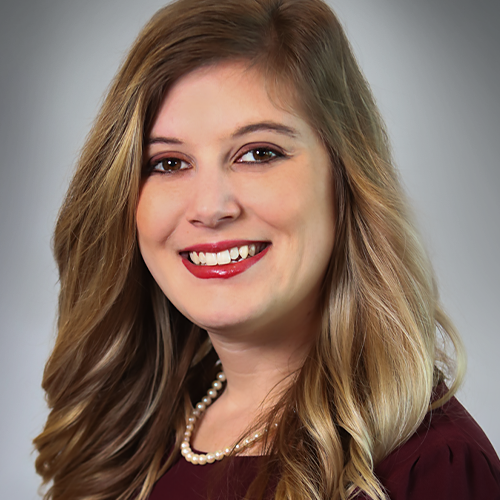
For any Government-related comments, questions or suggestions please contact:
Hilary Chebra
Manager, Government Affairs, CCSNJ